Blog

Updates on academic writing, product news, and research workflow.
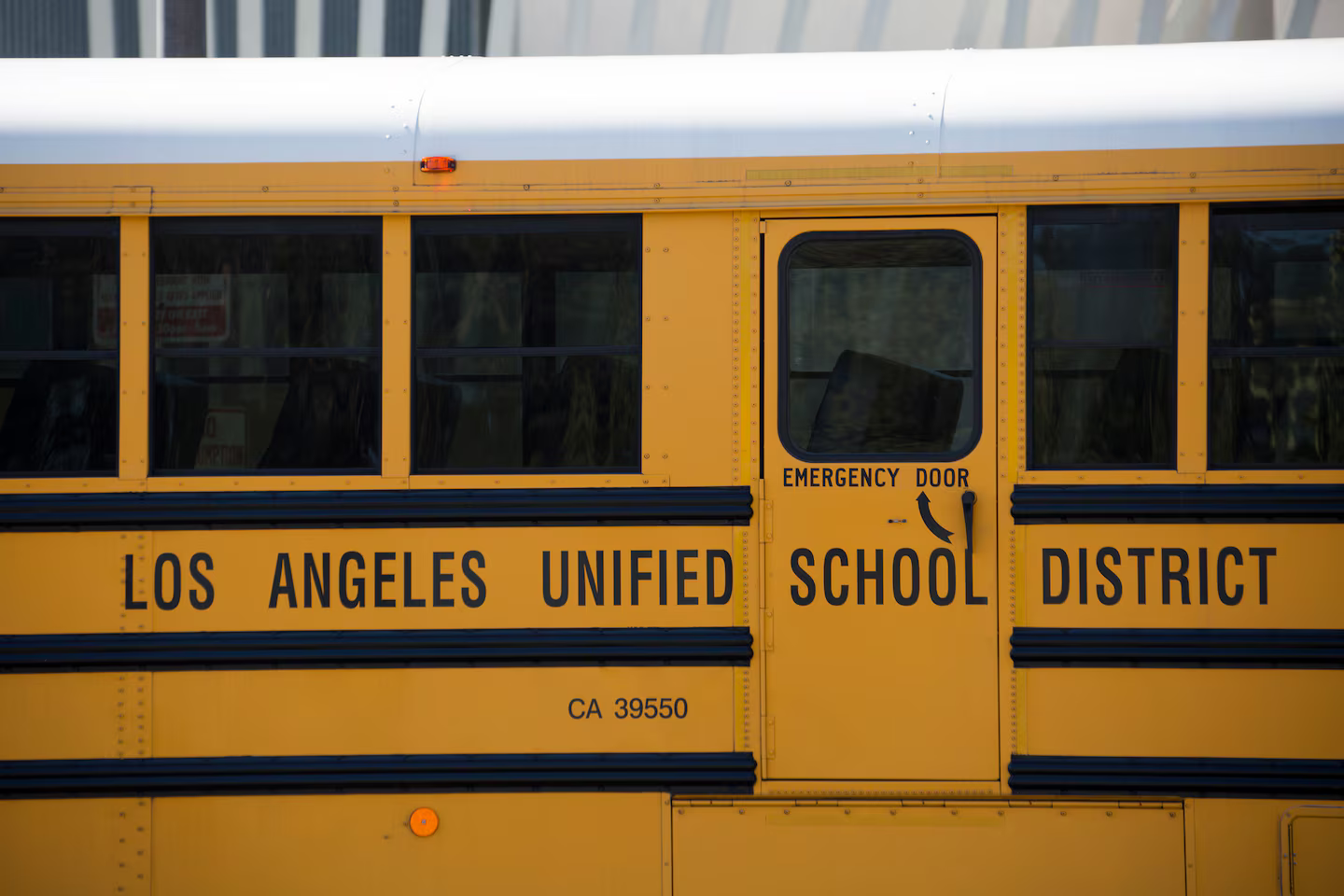
The action in the Los Angeles Unified School District comes after officials adopted strict screen time limits. (iStock)

Another big school district bans generative AI, this time for all students

The nation’s second-largest school district, has banned all student use of generative AI for the 2026–27 school year while the district reviews how AI should be used and what safeguards are needed. LAUSD’s approach highlights the growing tension between using AI responsibly and using AI everywhere. Typerighter offers a middle ground between a blanket ban and unrestricted access by allowing institutions to set clear boundaries around AI use, reduce students’ reliance on public LLMs, and maintain transparency into the writing process—so AI can support learning without replacing it.

Read post
  • The AI moratorium applies to district-owned devices. There is not yet a district policy on what students can do on non-district devices, an official said.

    LAUSD adopts moratorium on student AI use, another big move to limit classroom computer time

    Los Angeles Unified has enacted a districtwide moratorium on student use of generative AI on school-owned devices for the 2026–27 school year. Importantly, the district is not banning all AI: non-generative tools that support learning, translation, accessibility, and similar educational purposes remain available. The question isn’t whether AI is inherently good or bad, but when and how it supports learning. Institutions can set meaningful boundaries without eliminating useful technology altogether.

    Read post
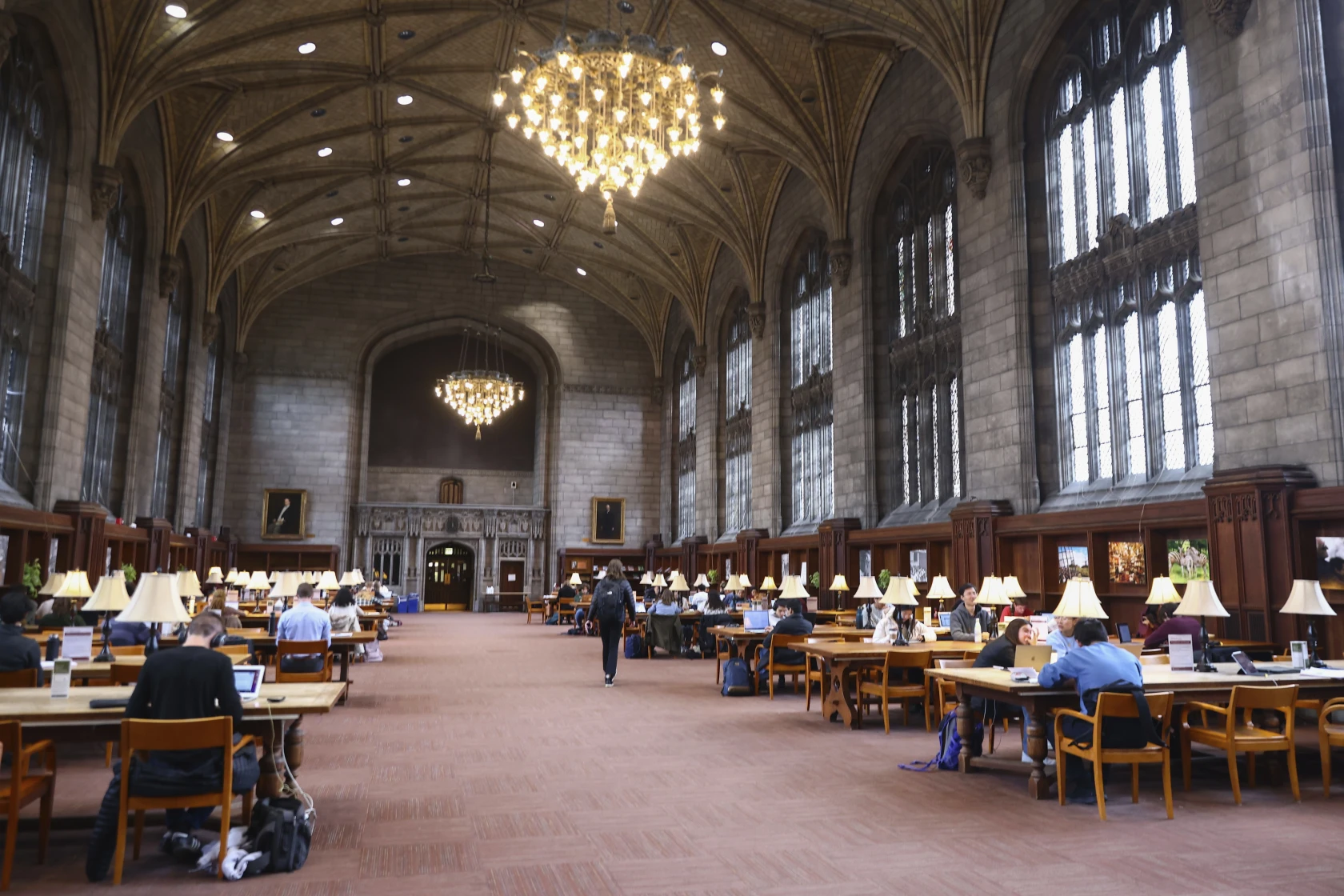
  • The William Rainey Harper Memorial Library at the U. of ChicagoBeata Zawrzel, Associated Press

    U. of Chicago Bans Tech, AI in Social Sciences Core Courses

    The University of Chicago's undergraduate social-sciences division is going “analog.” Beginning this fall, core courses will generally prohibit classroom technology and ban AI assistance on coursework for both students and instructors. But institutions don’t necessarily need to choose between an AI ban and unrestricted access.

    Read post
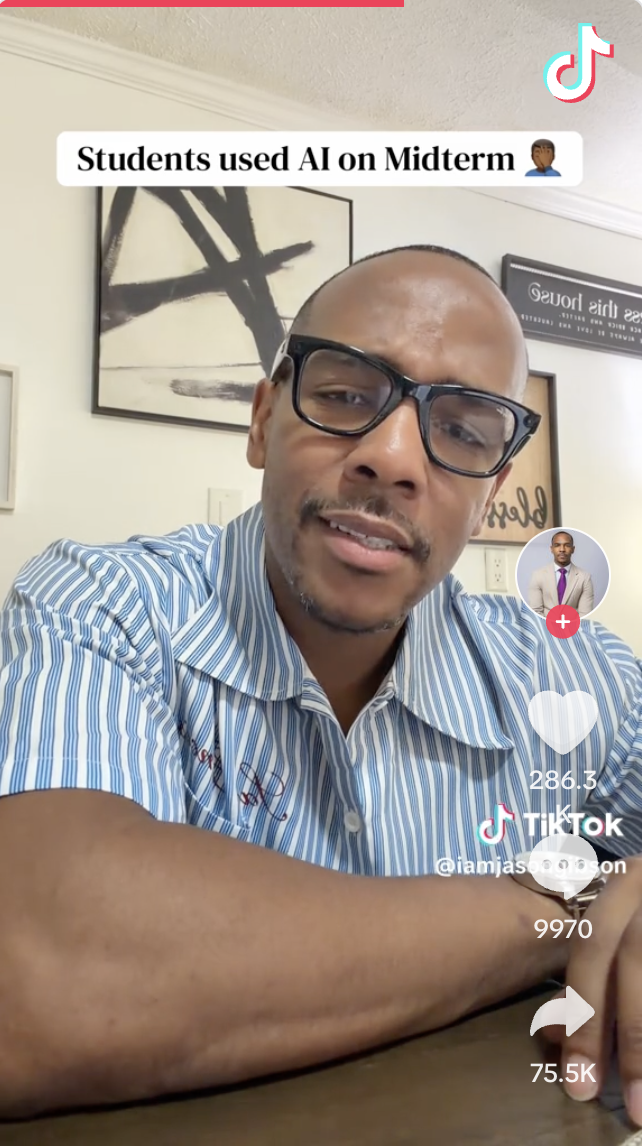
  • @iamjasongibson

    A Professor Created a Trap in His Midterm to Catch Students Using AI. Nearly All Made the Same Mistake

    32 of 35 students from Alcorn State University were caught using AI to cheat on a written assignment. Worse yet, they also failed to even review AI's work before submitting it as their own. The problem isn’t simply that students are using AI; it’s that unrestricted AI can make it easy to skip the learning entirely. Educators need support to preserve student's thinking, writing, and effort and combat against unrestricted AI.

    Read post
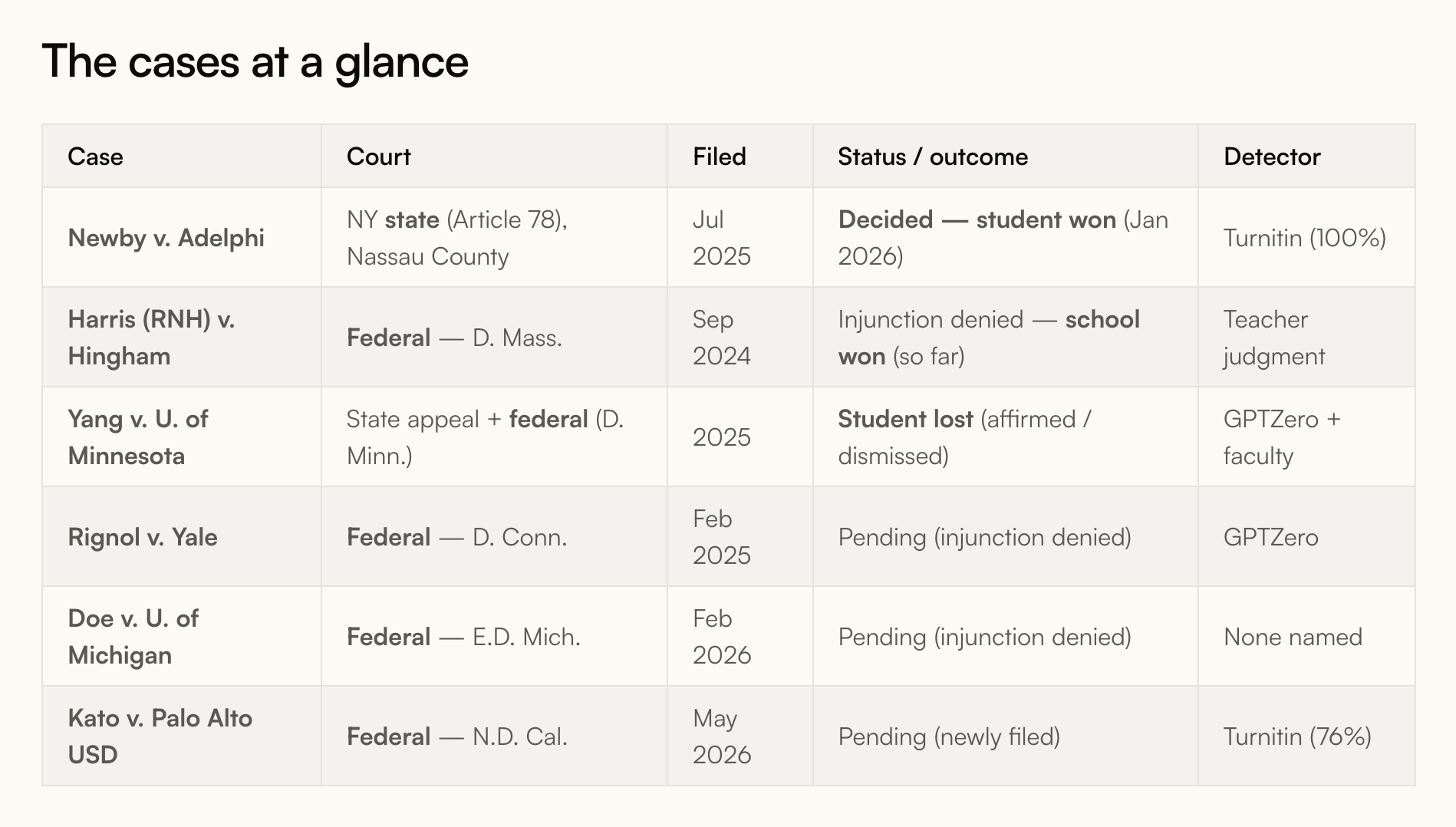
  • Every US AI-cheating lawsuit by court and outcome—who won, who lost, which detector flagged them. 6 cases tracked, with dockets and rulings.

    AI Cheating Lawsuits Tracker — Every Case, Who Won (2026)

    GradPilot’s tracker identifies six U.S. cases involving AI-detection accusations: one student has won, two cases have favored schools, and three remain pending. AI detection shouldn’t be the starting point for determining whether a student’s work is their own. Institutions need a better way to understand the writing process before an accusation is made.

    Read post
  • Rules need to move beyond detecting patterns to assessing the originality of thought. | Photo Credit: Freepik

    Why applying the UGC's plagiarism rules to detect AI may kill deep creativity

    Critics argue that rules proposed by India's University Grants Commission for AI use in higher education could undermine students’ creativity and independent thinking. The concern is not simply that students might use AI to cheat, but that overly restrictive or poorly designed AI policies could discourage experimentation and the kind of productive struggle that helps students develop original ideas.

    Read post
  • Even established ed-tech companies are marketing with a wink and a nod.

    Student Cheating Is Becoming Impossible to Detect in an A.I. Era

    AI cheating is becoming harder to detect because an entire ecosystem of tools now helps student do it. This is another reason institutions need to move beyond trying to catch AI use after the fact. Schools and educators need tools that provide controlled environments where AI use can be limited, transparent, and aligned with course policies—reducing students’ reliance on the growing ecosystem of public AI tools designed to make unrestricted AI use harder to detect.

    Read post
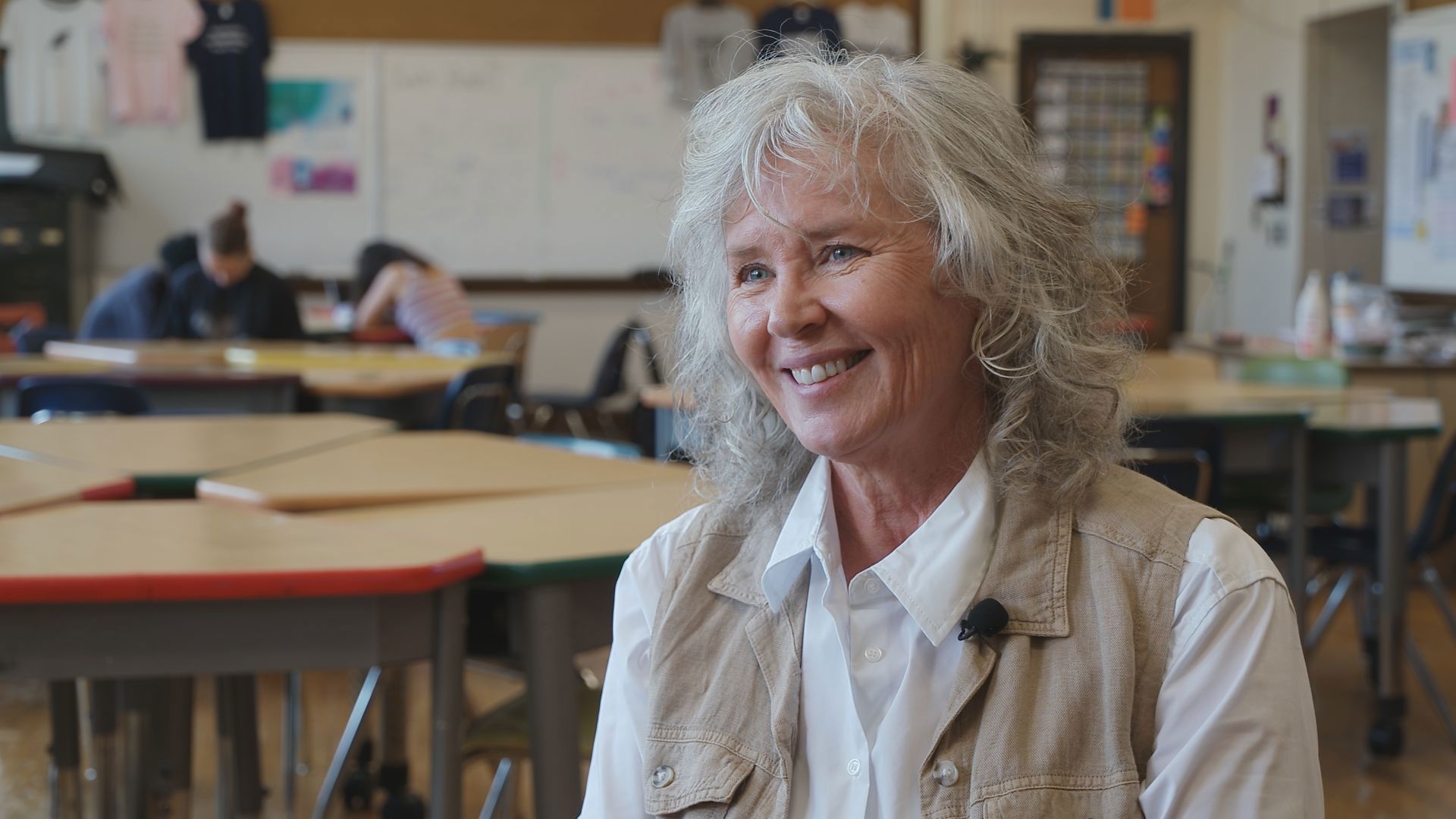
  • Credit: Devin Krinke. Maureen Mulvaney, an AP literature and English teacher at Washburn High School.

    Washburn High School teacher took tech out of the classroom. Students call it a success.

    A Washburn High School teacher in Minneapolis removed phones and Chromebooks from her AP Literature and English classroom for the first half of the school year. Students read, wrote, and discussed without screens—and many said they preferred it. The question isn’t whether technology belongs in the classroom—it’s about giving institutions the ability to establish intentional boundaries around technology while preserving the parts of education that require human attention, effort, and interaction.

    Read post
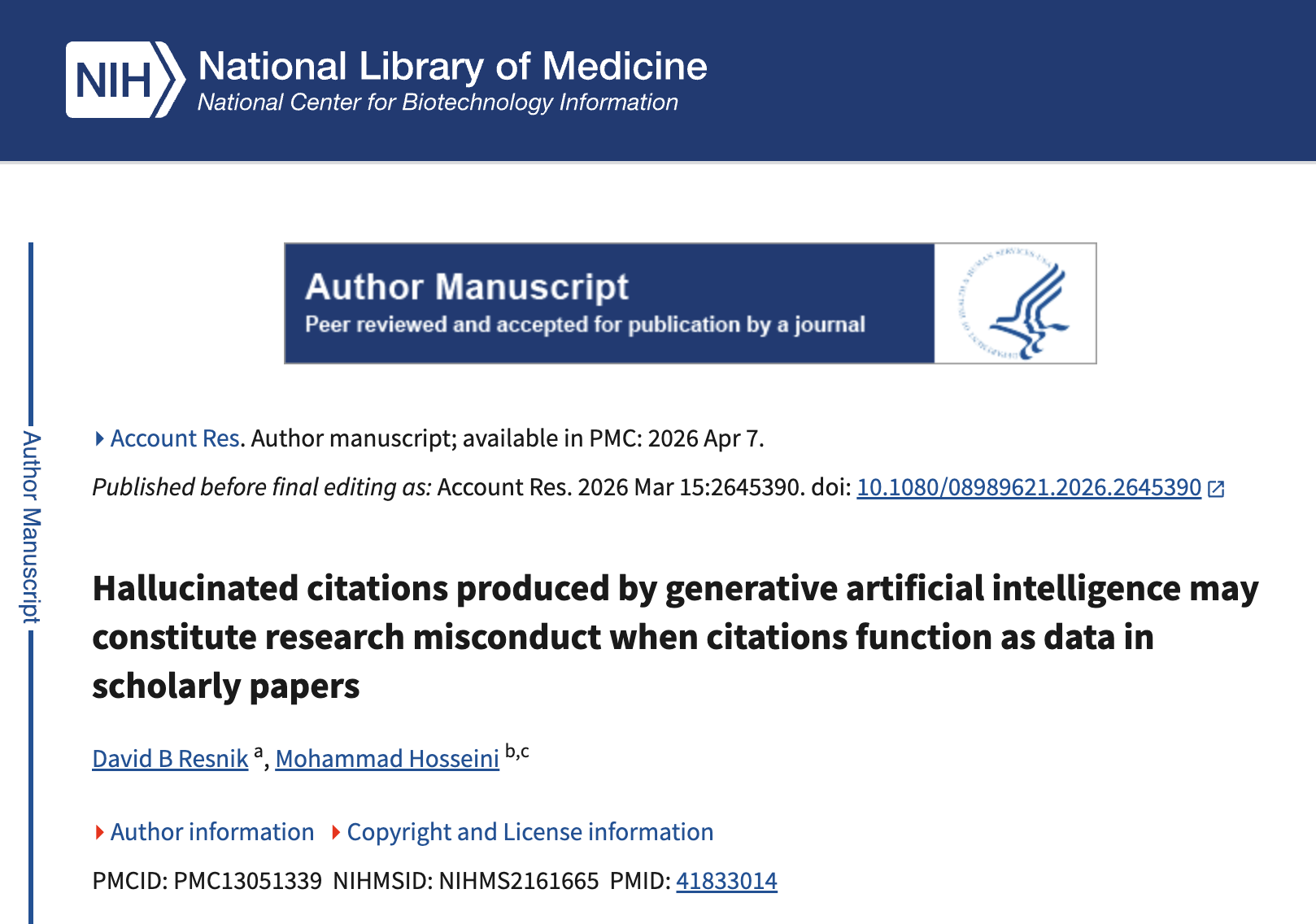
  • NIH Hallucinated citations produced by generative artificial intelligence may constitute research misconduct when citations function as data in scholarly papers

    Hallucinated citations produced by generative artificial intelligence may constitute research misconduct when citations function as data in scholarly papers

    This peer-reviewed article examines how generative AI systems can hallucinate citations, producing references that are inaccurate, incomplete, or entirely fabricated. The article argues that AI should complement human effort, not replace it. The goal of education is to help students develop the ability to think, research, write, solve problems, and learn independently. By connecting AI-supported learning with these established resources, institutions can encourage students to verify information, strengthen their research skills, and make informed use of the library services available to them.

    Read post
  • New survey from Packback finds about 5 percent of students say they often use AI to generate a full assignment.

    Students Embrace AI but Fear False Accusations

    Only about 5% of students regularly use AI to generate a full assignment, while many more use it to understand difficult concepts, summarize materials, or overcome academic obstacles. At the same time, nearly three-quarters worry about being falsely accused of AI misuse. The challenge is to support responsible AI use without treating every student as a potential cheater. With specially designed tooling to solve this problem that makes learning visible, educators can set fair AI boundaries, protect academic integrity, and ensure students receive credit for the work they genuinely do.

    Read post
  • AI Plagiarism Detection

    What Is Patchwork Plagiarism?

    Students combine copied material, lightly paraphrased text, and AI-generated writing into a single paper—making it harder to distinguish a student’s original work from material produced or borrowed elsewhere. The more AI is used as an unrestricted intermediary between students and their sources, the harder it becomes to understand where a student’s ideas and writing actually came from.

    Read post
  • Curtin is making some changes to the way Turnitin (the text matching tool that checks for unoriginal material) is used in student assessments.

    Update on Turnitin AI-Detection Tool

    Yet another university is disabling Turnitin’s AI-writing detector across all campuses. This decision reflects a broader shift away from detecting AI after the fact and toward creating environments where students’ work and AI use are transparent from the beginning.

    Read post
  • Teaching @ JHU

    Detection Tools: Limitations and Alternatives

    Johns Hopkins is warning educators not to rely on AI detectors due to questionable accuracy, false positives, and evidence that detectors can be biased against non-native English speakers. AI detection tries to answer the question after the fact: “Did this student use AI?” A better approach is to make AI use transparent from the start.

    Read post
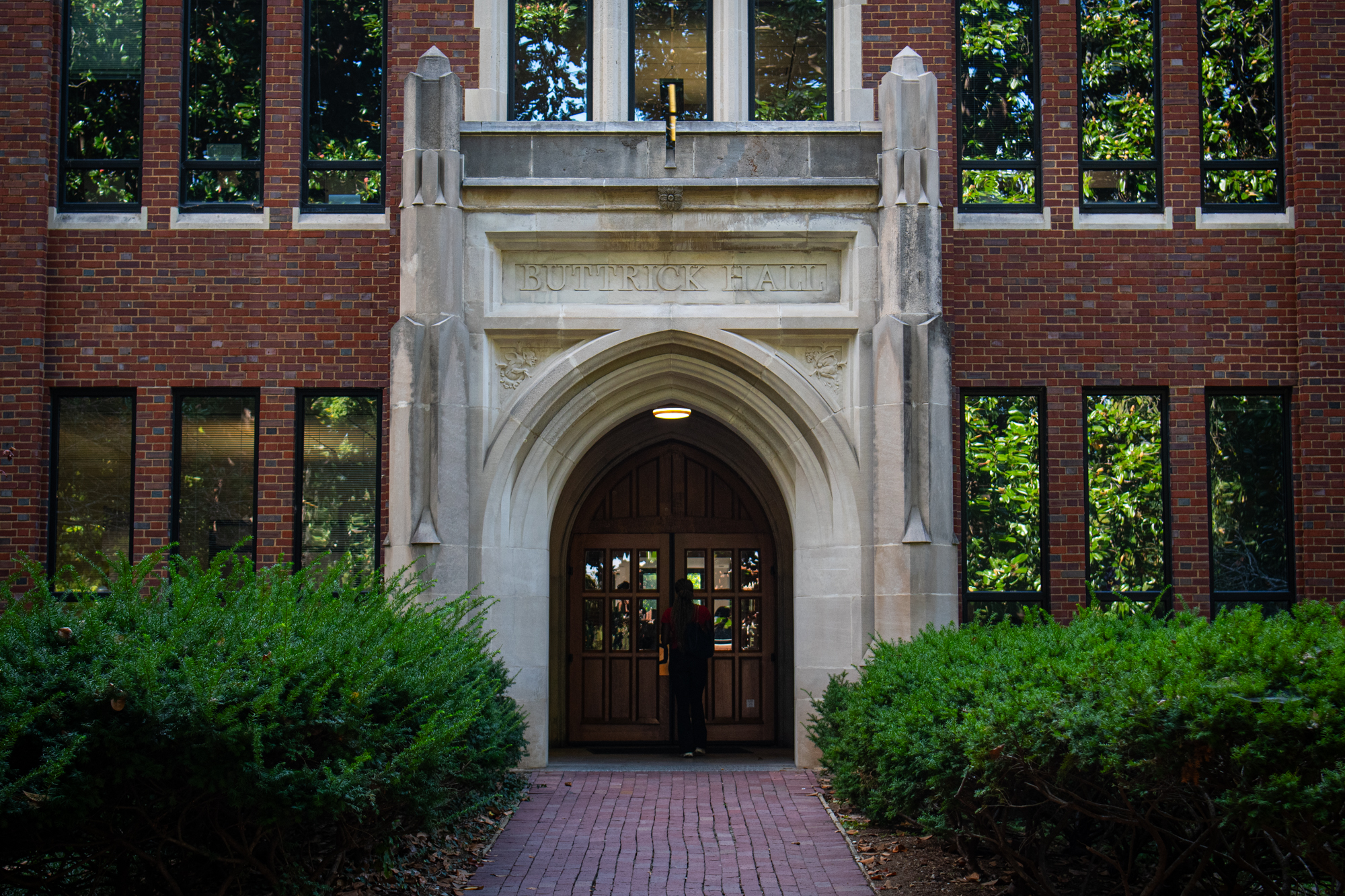
  • Front entrance of Buttrick Hall, as photographed on Sept. 9, 2025. (Hustler Multimedia/Savannah Walske)

    Guidance on AI Detection and Why We’re Disabling Turnitin’s AI Detector

    Vanderbilt disabled Turnitin’s AI detector after finding serious concerns around its reliability, lack of transparency, potential bias, and student privacy. Their experience highlights a fundamental problem with trying to manage AI use by simply asking, “Can we detect it?” Instead of relying on imperfect AI detectors after the fact, institutions can create environments where AI use is more transparent and controlled from the start.

    Read post
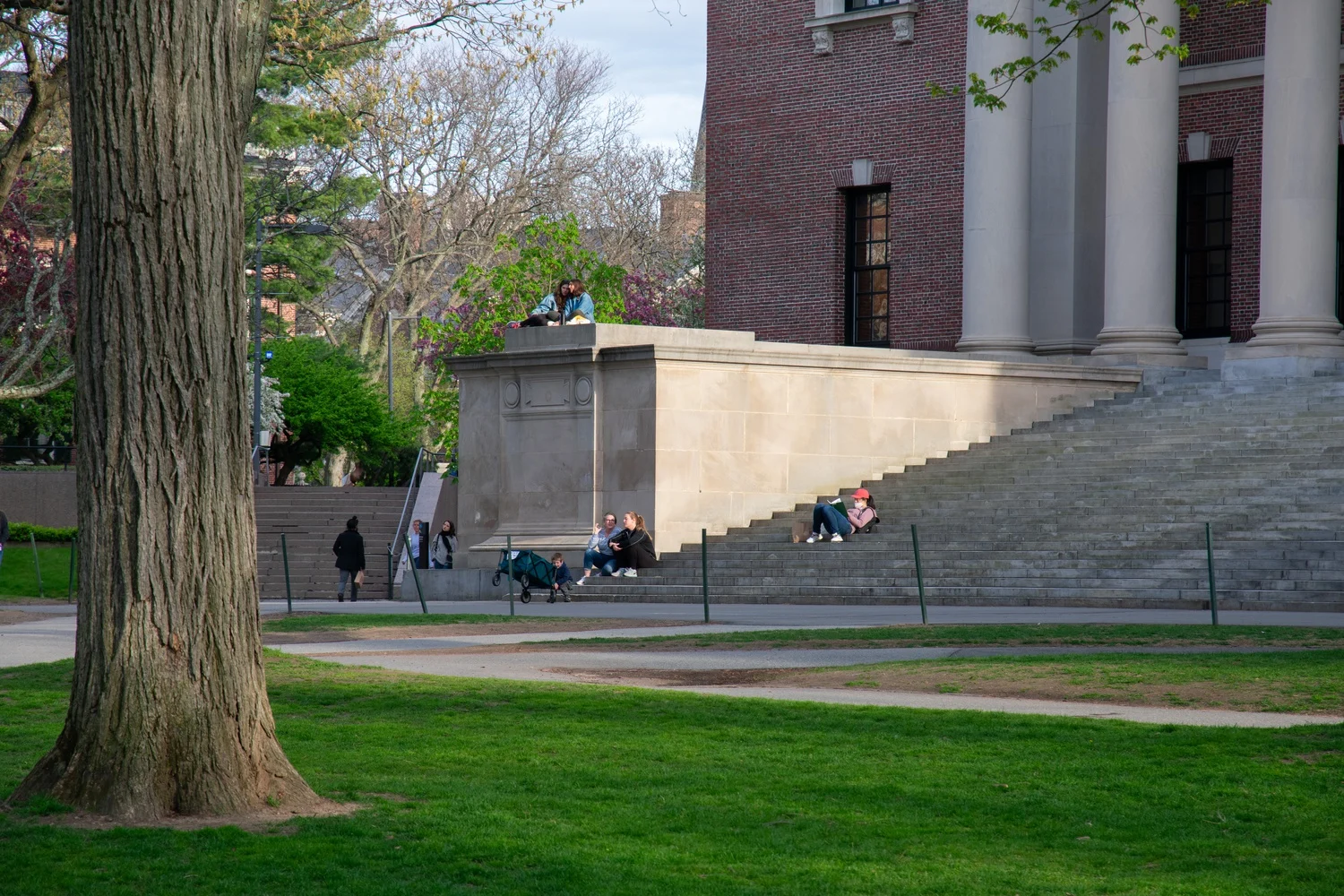
  • Undergraduates Ramp Up Harvard AI Safety Team Amid Concerns Over Increasingly Powerful AI Models

    Undergraduates Ramp Up Harvard AI Safety Team Amid Concerns Over Increasingly Powerful AI Models

    Undergraduates at Harvard aren’t just aware of the risks surrounding rapidly advancing AI—they’re taking action. Because the risks of unfettered AI use aren’t limited to the future. Institutions can reduce those risks today by creating environments where students have access to AI within clear boundaries, rather than sending them to public LLMs with few safeguards or visibility.

    Read post