What Is Patchwork Plagiarism?
What You Should Know
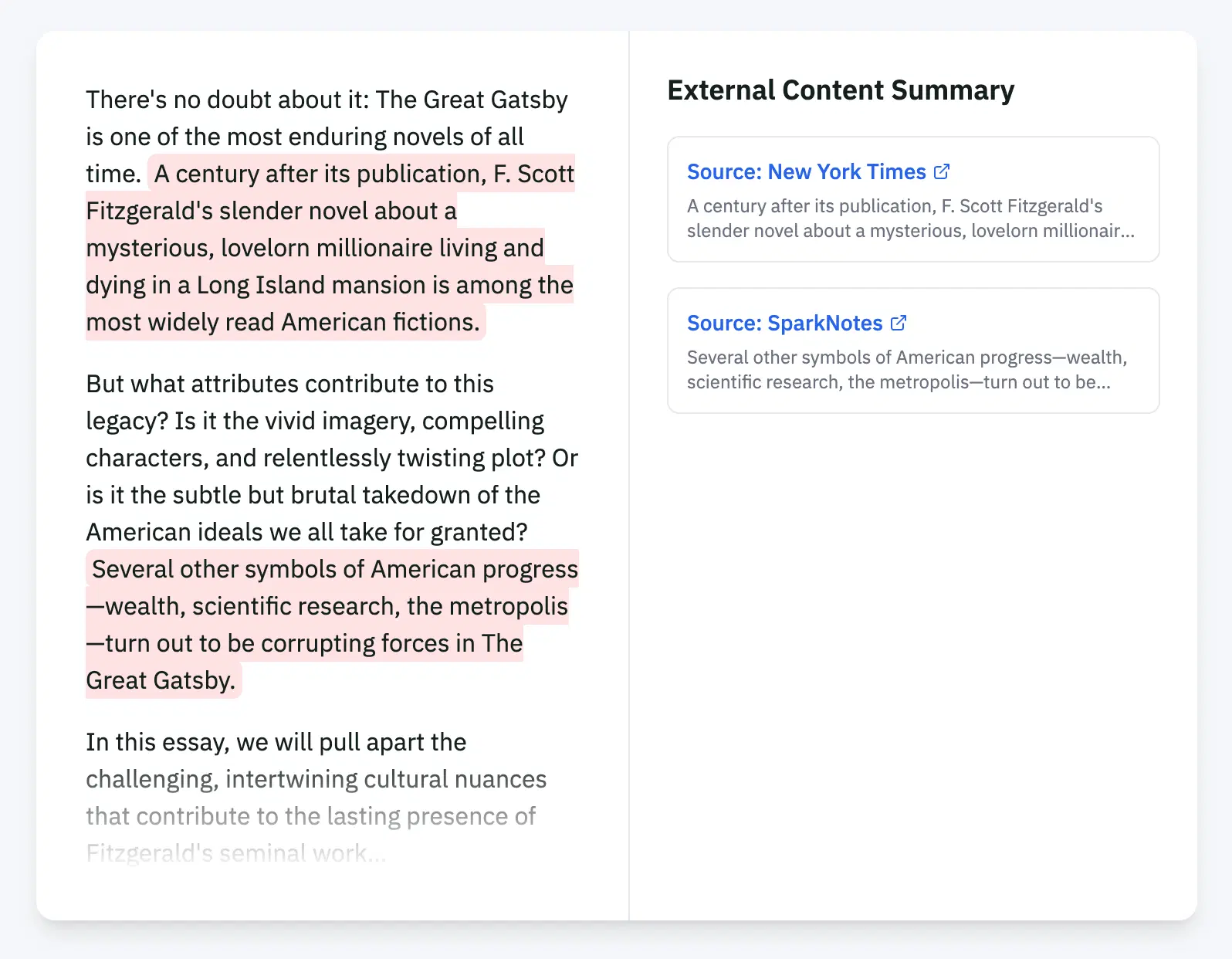
AI is making plagiarism more complicated. Students can now combine copied material, lightly paraphrased text, and AI-generated writing into a single paper—making it harder to distinguish a student’s original work from material produced or borrowed elsewhere. This “patchwork plagiarism” blurs the line between human thought, copied work, and AI generation.
Why should educators care? The more AI is used as an unrestricted intermediary between students and their sources, the harder it becomes to understand where a student’s ideas and writing actually came from. Typerighter gives institutions visibility into the writing process—including AI use and externally copied or pasted content—so instructors can better understand how a piece of work was developed, rather than relying solely on detection after submission.
Cheating is rarely as simple as a student copying and pasting a whole Wikipedia article. Students are using more sophisticated methods to disguise unoriginal work.
The rise of Large Language Models, like ChatGPT, has supercharged a form of academic dishonesty known as “patchwork plagiarism.” Patchwork plagiarism, when conducted with AI, confuses standard grading tools and makes it more difficult for educators to properly assess their students’ work.
This guide defines “patchwork plagiarism,” explains how AI has complicated patchwork plagiarism, and shows how educators can use combined AI and plagiarism checkers to unpack complex document authorship. [Read the full article.]