Student Cheating Is Becoming Impossible to Detect in an A.I. Era
What You Should Know
AI cheating is becoming harder to detect—not because students have become better at hiding their work, but because an entire ecosystem of tools now helps them do it. Students can use AI to generate assignments, “humanize” AI-written text, or even simulate the drafting and revision process, making traditional detection and version history increasingly unreliable.
Why should educators care? This is another reason institutions need to move beyond trying to catch AI use after the fact. Typerighter helps institutions create controlled environments where AI use can be limited, transparent, and aligned with course policies—reducing students’ reliance on the growing ecosystem of public AI tools designed to make unrestricted AI use harder to detect.
The videos are all over social media, making students an irresistible offer: Go ahead and let A.I. do your homework — with the latest technology, you won’t get caught.
If you hate writing, you can avoid it.
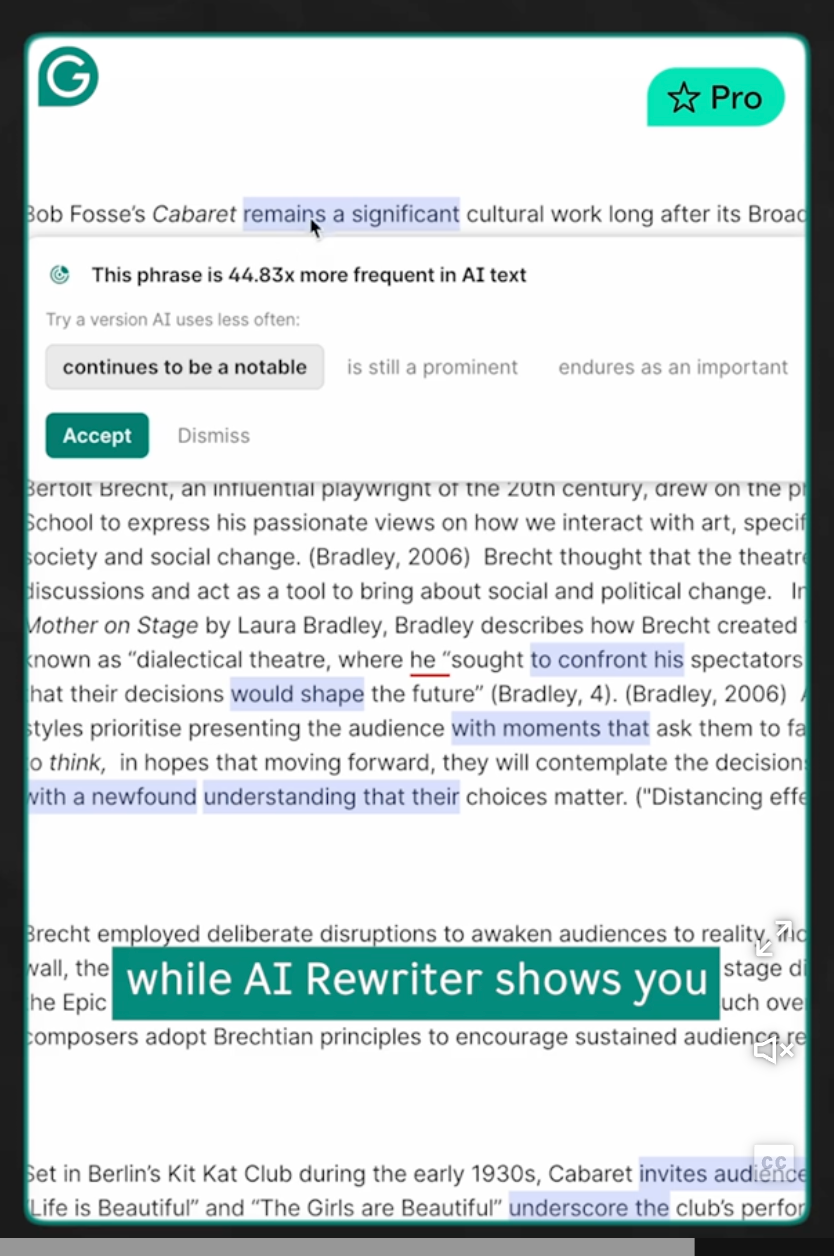
Even established ed-tech companies are marketing with a wink and a nod.
These kinds of tutorials are now pervasive on TikTok and YouTube. They show students how to use tools known as humanizers and autotypers, which make it easier than ever to cheat. The videos — sometimes labeled ads, sometimes not — target college and high school students. [Read the full article.]